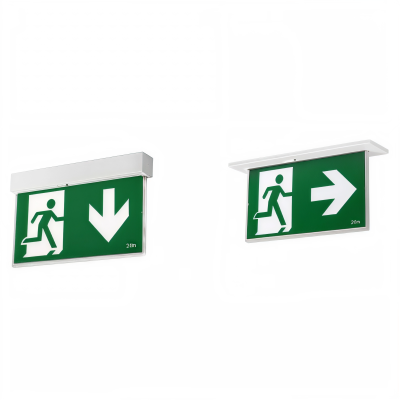
Emergency and Evacuation Lighting for Buildings and Facilities
Emergency lighting is used in buildings and facilities where illumination is required when the main power supply fails. It helps people find their way through corridors, staircases, entrances, exits, car parks, warehouses, offices, shops and public spaces.
At Designzone.bg, you will find emergency lights, LED evacuation signs and luminaires for marking exits and movement routes. The category is suitable for customers looking for solutions for residential buildings, commercial premises, office spaces, industrial facilities and public areas in Bulgaria.
Emergency Lights and Evacuation Signs
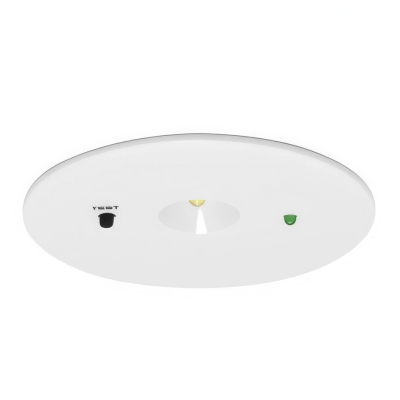
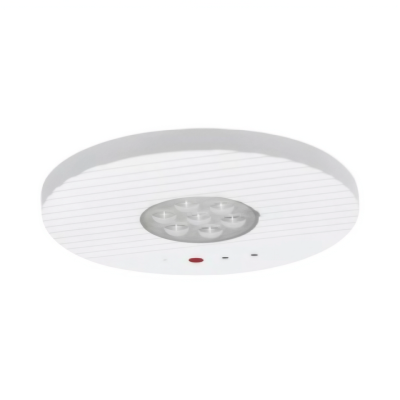
Emergency lights are used to illuminate important areas when the main lighting stops working. They can be installed in corridors, stairwells, service rooms, warehouses, underground car parks and other spaces where orientation needs to remain possible during an emergency.
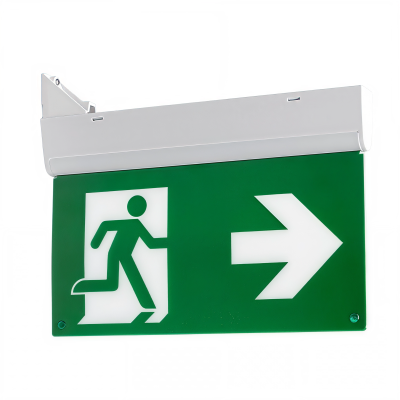
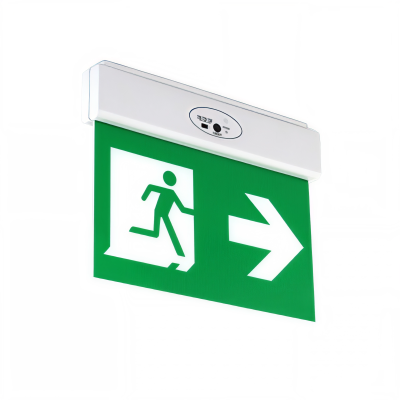
Evacuation signs indicate the direction towards an exit, emergency door or safe route. They are most commonly installed above exits, along long corridors, where the direction of movement changes and in areas where the evacuation route must remain clearly visible. The exact positioning depends on the project and the specific requirements of the building.
Where Emergency Lighting Is Used
Emergency and evacuation lighting is used in many types of facilities, including offices, shops, restaurants, hotels, residential entrances, warehouses, production areas, car parks and public buildings. In larger spaces, a combination of emergency luminaires and evacuation signs is usually required to cover the main routes.
In smaller rooms, a compact emergency luminaire may be sufficient, while in long corridors, staircases and large halls, the layout should be planned in advance. Models such as Scarled, Viola and Marsel can be considered according to the installation location, required coverage and the way the space will be used.
How to Choose the Right Emergency Luminaire
When choosing emergency lighting, the first step is to determine the role of the luminaire, whether it will illuminate a route, mark an exit or provide additional light in the event of a power failure. The installation location, visibility, room size and requirements of the specific project should then be considered.
- For corridors, look for even light distribution along the route.
- For staircases, pay attention to visibility where floor levels change.
- For exits, use clearly visible evacuation signs.
- For car parks and warehouses, check whether the selected model is suitable for the relevant environment.
Some emergency luminaires may include a built-in battery and autonomous operation during a power outage. These specifications should always be checked in the description of the individual model, as operating time, battery type and activation mode may vary between products.
Online Selection from Designzone.bg
When choosing online at Designzone.bg, compare the type of luminaire, installation method, autonomy, battery, operating mode, dimensions and intended use. For facilities with specific project requirements, the choice should be coordinated with the electrical design, evacuation plan and applicable building requirements.
Emergency and evacuation lighting should not be selected solely on the basis of price or appearance. More importantly, the luminaire should be suitable for the installation location, provide clear orientation and fulfil its intended function within the facility. This makes the solution more practical for corridors, staircases, exits, offices, shops and other areas where safe movement during a failure of the main lighting is important.


-1000x1000h-Photoroom-36x36.png)


-36x36.jpg)


-1000x1000h-Photoroom-36x36.jpg)

%20влагозащитена/photo_2026-06-12_15-31-46-36x36.jpg)

%20влагозащитена/photo_2026-06-12_15-26-50-36x36.jpg)

%20влагозащитена/wpc-36x36h.jpg)





-1000x1000h-Photoroom-24x24.jpg)
%20влагозащитена/photo_2026-06-12_15-31-46-24x24.jpg)

%20влагозащитена/photo_2026-06-12_15-26-50-24x24.jpg)

%20влагозащитена/wpc-24x24h.jpg)